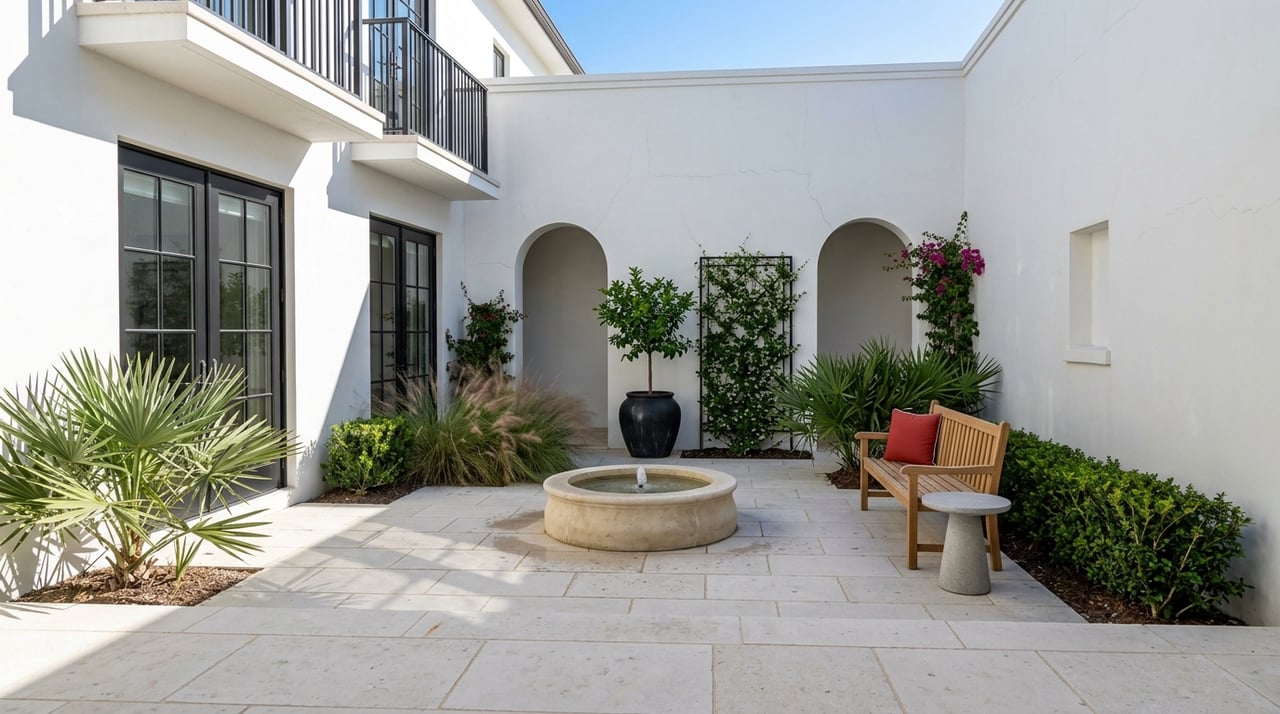
Looking for a beach community that feels thoughtfully designed instead of pieced together over time? In Rosemary Beach, the architecture, courtyards, and walking paths are not just pretty details. They shape how you move through the day, how you gather with family and friends, and how the neighborhood feels once you settle in. If you are considering a home here, understanding that connection can help you decide whether Rosemary Beach fits the way you want to live. Let’s dive in.
Rosemary Beach was planned as a village
Rosemary Beach began in 1995 as a gulf-front community on the eastern end of Scenic Route 30A in Walton County. Official community history describes it as a 107-acre development created to restore a sense of community, neighborhood, and convenience. DPZ, the planning firm behind the project, lists it at 105 acres with about 800 units and roughly 55,000 square feet of retail.
That planning shows up right away when you visit. Instead of feeling like a spread-out beach subdivision, Rosemary Beach feels more like a compact village. Homes, paths, parks, and gathering spaces are arranged to make walking and everyday interaction part of the experience.
Architecture sets the tone
Rosemary Beach was designed by Andres Duany and Elizabeth Plater-Zyberk under a strict urban code. That means homes are custom-designed, but they still follow a shared framework that keeps the streetscape cohesive. Rather than sameness, the goal is controlled variety.
According to the community’s architectural guidelines, homes fit within 12 basic building types. Materials and finishes tend to include wood siding, cedar shingle, stucco, and metal or shingle-shake roofs in subtle natural tones. DPZ also notes a stronger use of masonry and darker wood-stain palettes than in Seaside, along with native landscaping that has grown into a dense canopy over time.
For a buyer, this matters because the look of the community is protected by design. You are not just buying an individual home. You are buying into a place with a clear visual language and a long-term identity.
Courtyards are part of daily living
One of the most distinctive parts of Rosemary Beach is how outdoor space is used. The community describes deep eaves, high ceilings, porches, gardens, and fountain-filled courtyards as outdoor rooms. That phrase captures the lifestyle here better than a standard description of patios or yards.
In many homes, the outdoor areas feel layered and intentional. You move from interior rooms to porches, then to enclosed or semi-private courtyards, then out toward the wider pedestrian network. The result is a style of living that extends beyond the walls of the home without relying on a large, open backyard.
For many buyers, that creates a different kind of privacy. A courtyard may not feel like a traditional backyard, but it often feels more sheltered and more connected to the architecture of the home. If you enjoy quiet outdoor mornings, shaded dining, or spaces that feel tucked away rather than exposed, that design can be a major draw.
Walkability is built into the plan
Rosemary Beach is designed around pedestrian lanes, footpaths, boardwalks, and smaller hidden pathways that connect homes to the Town Center, pools, tennis courts, and the beach. Parking is generally pushed to alleyways behind homes, which helps keep the public-facing streets more inviting for people on foot.
The official site says much of the community is within a five-minute walk. That is a big part of why life here feels easy and connected. You are not constantly getting in and out of a car to enjoy the parts of the neighborhood that matter most.
The pedestrian focus is also reinforced by community rules. According to the POA rental rules, sidewalks, boardwalks, and bike paths are limited to pedestrians and bicycles, while golf carts, low-speed vehicles, ATVs, and similar vehicles are not allowed. That helps preserve the quieter, walk-first character people often notice right away.
The boardwalks connect home to beach
Beach access in Rosemary Beach is organized around nine dune walkovers. These walkovers are meant to protect the dune system and help limit erosion, while still giving residents and guests practical access to the shoreline. The community also states that it committed to staying landward of the coastal construction control line.
These walkovers are described as simple and functional, and they include showers. That detail may sound small, but it reflects the way the community blends design with everyday convenience. Even your return from the beach feels built into the rhythm of the neighborhood.
Everyday life centers on shared spaces
The Town Center serves as the social and commercial hub of Rosemary Beach. Shops, restaurants, Town Hall, and the Post Office are all close enough to reach on foot. That layout gives the community a lived-in feel that goes beyond vacation imagery.
Recreation is also spread throughout the neighborhood instead of being concentrated in a single amenity zone. Official community information highlights four pools, parks, Butterfly Park, St. Augustine Park, and smaller pocket parks along the boardwalks. There is also a fitness center with a daily-use courtyard, which continues the indoor-outdoor pattern seen throughout the community.
This matters if you are thinking beyond a weekend stay. A well-designed community supports small daily habits, not just big beach days. In Rosemary Beach, that can mean a morning walk, time at a nearby park, an easy trip into Town Center, or a quick walk to a pool without having to plan your whole day around it.
Full-time living is practical with a caveat
A common question from buyers is whether Rosemary Beach works for full-time living. Based on the community’s layout and amenities, the answer is yes for many people, especially if you value walkability, access to shared spaces, and a strong sense of place.
There is one practical tradeoff to keep in mind. The community FAQ states that there is currently no grocery store within Rosemary Beach. So while many parts of daily life can happen on foot, you will still rely on nearby towns for some routine shopping and errands.
That is not necessarily a drawback for every buyer. For some, it is simply part of living in a well-planned beach community where the focus is on design, public space, and lifestyle rather than trying to place every possible service inside the neighborhood.
Why design-minded buyers pay attention
Rosemary Beach stands out because the architecture and the community plan work together. Courtyards, porches, boardwalks, and alley-loaded parking are not decorative extras. They are the framework that shapes how the neighborhood functions.
If you are choosing between 30A communities, this is one of the clearest distinctions to understand. Rosemary Beach is especially appealing if you want a home that feels connected to a larger village setting, where the beach, pools, parks, and Town Center are all part of the same walking network.
That can be especially important for second-home buyers and out-of-town buyers. When you are not just buying square footage, but also buying a lifestyle, neighborhood design has a direct impact on long-term enjoyment. A beautiful home matters, but so does what it feels like to step outside and live there.
What to notice when touring homes
If you are touring homes in Rosemary Beach, pay close attention to how each property handles outdoor space and access. Two homes with similar square footage can feel very different based on courtyard layout, porch depth, privacy, and how directly they connect to paths or parks.
Here are a few smart things to look for:
- How the courtyard feels at different times of day
- Whether porches and outdoor rooms feel private or more exposed
- How easy the walk is to the beach, Town Center, pools, and parks
- Whether alley access and parking placement suit your preferences
- How the home’s architecture fits with the streetscape around it
These details can shape your day-to-day experience just as much as bedroom count or interior finishes. In Rosemary Beach, the lifestyle often lives in the spaces between the walls.
If you are exploring Rosemary Beach as a primary home, second home, or legacy property along 30A, working with a local advisor can help you compare not just homes, but also how each one lives within the community. When you are ready to talk through neighborhoods, lifestyle fit, and current opportunities, connect with Gary Bowman.
FAQs
What makes Rosemary Beach architecture distinctive?
- Rosemary Beach uses a strict urban code with custom homes designed within 12 basic building types, creating visual consistency through materials, scale, and outdoor living spaces.
How do courtyards function in Rosemary Beach homes?
- Courtyards are designed as outdoor rooms that extend daily living outside, often offering a more enclosed and intentional space than a traditional open backyard.
Is Rosemary Beach easy to walk around?
- Yes. The community is organized around pedestrian lanes, footpaths, and boardwalks, and much of Rosemary Beach is within a five-minute walk according to the official site.
What is everyday life like in Rosemary Beach?
- Daily life often centers on walking to the Town Center, parks, pools, and the beach, with shared spaces distributed throughout the community rather than in one single amenity area.
Is Rosemary Beach practical for full-time living?
- Yes for many buyers, especially those who value walkability and amenities, but there is currently no grocery store within the community so some errands require trips to nearby towns.